
What Counts as UGC-Style Video?
UGC-style doesn't mean UGC. Genuine UGC is content from real users — unboxing reactions, testimonials — and its value is verifiable: a real account, a real person, a real experience. Research on user-generated content shows this builds trust because it sits outside the brand's control.
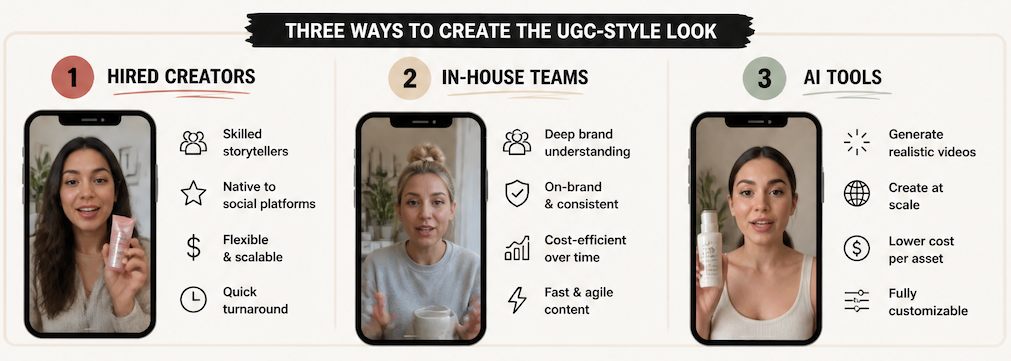
UGC-style is an aesthetic — handheld framing, casual lighting, talking-to-camera energy. It can come from hired creators, in-house teams, or AI tools. The look is similar; the source changes what disclosure applies:
Format | Source | Trust signal | Disclosure typically needed |
|---|---|---|---|
Genuine UGC | Real customer | Independent, unpaid | Usually no, unless incentivized |
UGC-style, human-made | Hired creator, scripted | Aesthetic only | Yes, in paid media |
UGC-style, AI-generated | AI video tool | None — no real person | Yes, plus AI-labeling rules |
AI can produce ugc-style video matching the visual register of organic content. It cannot produce the social proof of a real person's real opinion — conflating the two is where legal and platform risk starts.
UGC Services vs AI Video Tool vs Hybrid Workflow
Human creator services
UGC creator platforms connect brands with real people who film themselves using a product — genuine testimonial content, less controllable but carrying the trust signal of a real face and account.
Turnaround is typically three to seven days. For content that needs to credibly appear as organic endorsement, this is the only compliant path — the FTC's native advertising guide is explicit that ads must not mislead viewers about their commercial nature or source.
AI video creator workflows
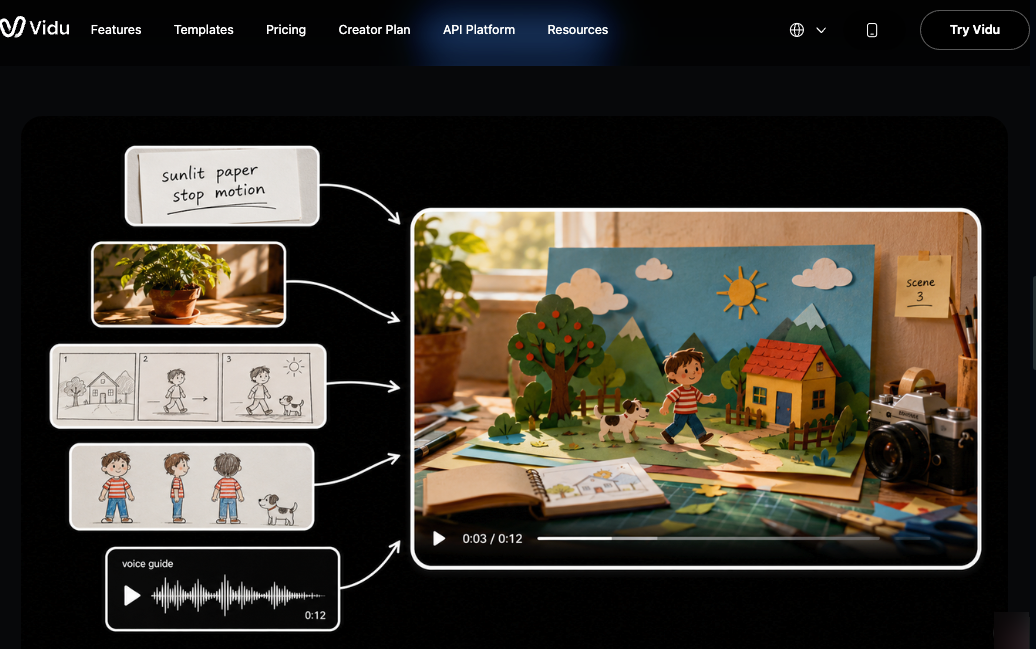
An AI video creator workflow replaces the human entirely: write a script, select reference images, generate, edit. It covers concept testing, visual prototyping, and internal reviews well.
In a small test on Vidu's Pro tier (May 2026) — five generations of a 15-second product clip from one reference image — three outputs kept the product's label and color consistent; two showed label distortion around the 8-second mark, needing a regenerate. Roughly two in five single-reference attempts needed a redo — budget for that.
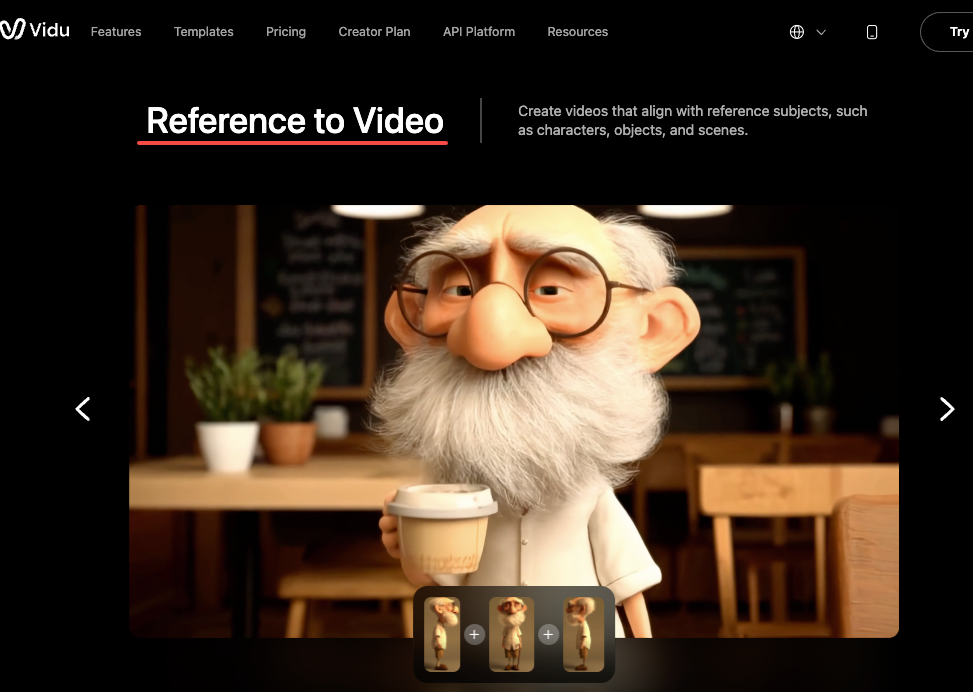
What AI doesn't cover: any scenario where the content is presented as coming from a real user. That's a compliance issue, not a quality one. Vidu's Reference to Video and multi-reference consistency helped reduce the drift above when several reference images were used instead of one. The API terms of use confirm commercial use isn't restricted on paid plans, provided the content is labeled appropriately.
Templates and reusable assets
The middle path: AI-generated motion assets (backgrounds, b-roll, text animations) inside a production where a real creator records the talking-head segment. This keeps the human trust signal intact while cutting cost on parts viewers don't use to judge authenticity.
How to Compare AI Tools for UGC-Style Video
"Video creation tools" covers a wide range — output quality alone misses what matters for ongoing use:
Tool | Pricing | Commercial license (paid) | Multi-reference consistency | Typical clip | Best fit |
|---|---|---|---|---|---|
Vidu | Credit-based | Yes, watermark removed | Yes, multiple images | Short, seconds | Product consistency, stylized content |
Runway (Gen-4) | Subscription + credits | Yes | Limited | Short, editing-integrated | Post-production pipelines |
Kling | Credit-based | Yes | Limited | Longer single clips | Motion-heavy shots |
(Reflects publicly available plan info as of June 2026 — confirm directly before committing budget.) Adoption isn't theoretical: Wyzowl's 2026 survey found 63% of video marketers have used AI tools for marketing video to create or edit content.
Cost
Credit-based pricing is harder to forecast than flat subscriptions — the real variable is how many attempts you need before a usable output, which depends on subject complexity. On Vidu, paid tiers include commercial rights and remove the watermark; free-tier output is watermarked and non-commercial.
Turnaround
Generation is fast, but "fast generation" and "fast usable output" differ. Based on the test above, the second or third generation is usually where consistent output appears for simple product clips — simpler inputs tend to be more stable.
Creative control
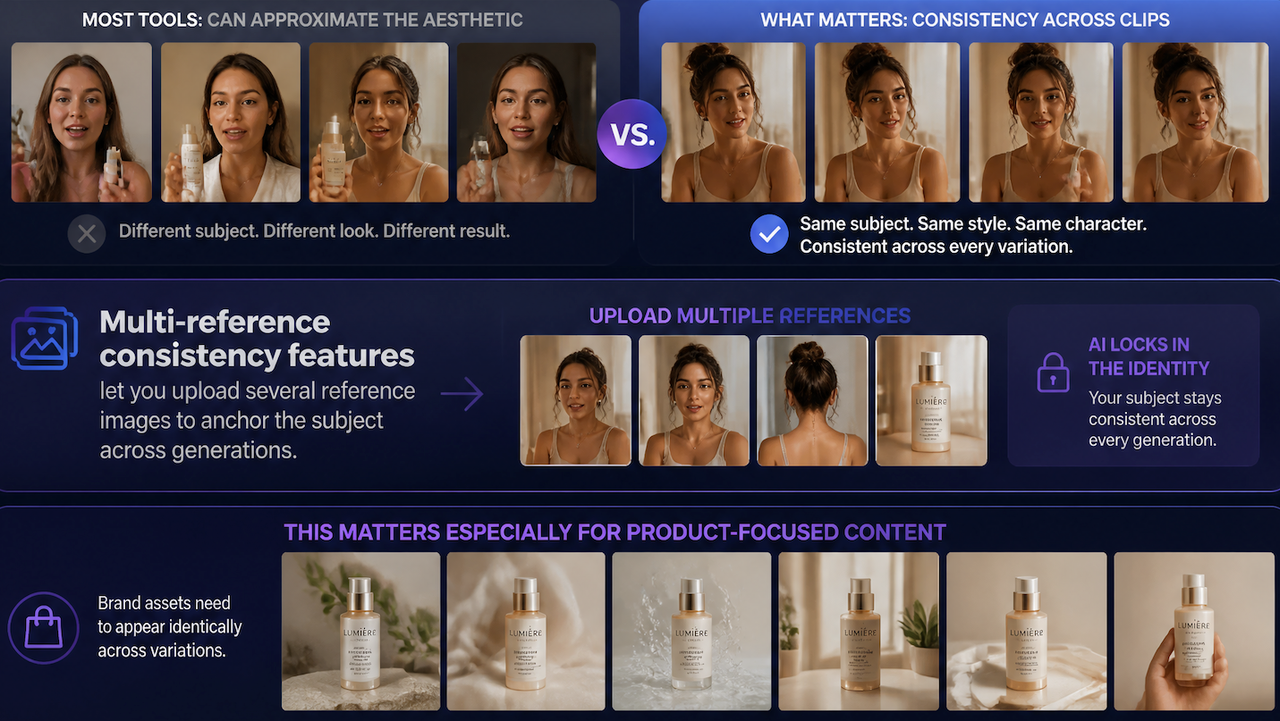
The real question is whether you can maintain consistency across clips — same subject, style, character. Multi-reference consistency, uploading several reference images to anchor the subject, is the feature most likely to reduce label drift like the kind tested above.
Usage rights
Evaluate this first, not last. The US Copyright Office holds that purely AI-generated content doesn't qualify for copyright protection. Vidu's API terms (as of June 2026) grant a broad commercial-use license without making ownership claims, since most jurisdictions haven't resolved this fully.
Platform | Free-tier commercial use | Paid-tier commercial use | Watermark removed (paid) |
|---|---|---|---|
Vidu | No | Yes | Yes |
Runway | Limited, varies | Yes | Yes, most plans |
Kling | Limited, varies | Yes | Yes, most plans |
(As of June 2026 — confirm before relying on it.) Platform terms aren't the whole picture: the EU AI Act and various US state laws add labeling requirements that apply based on where content runs, not where the tool is based. For paid distribution, check your jurisdiction before publishing.
When AI Video Fits UGC-Style Content
The best AI tools for UGC-style video aren't substitutes for human creator content across the board — they fit specific contexts:
Concept testing before creator spend. Generate multiple angles before briefing real talent — testing several AI concepts costs a fraction of filming the same variations with hired creators.
Animated and stylized product content. When the brief doesn't need a human face, AI is a direct fit — the ability to create animated video content with consistent style across a series is where current tools add real value.
Internal stakeholder review. An AI concept clip communicates framing and tone faster than a written brief, at lower cost than a rough cut.
Supplementary B-roll. Background footage and transition clips don't carry authenticity requirements and skip the rights complexity of stock licensing.
Where it doesn't fit: testimonial or review-style content implying a real person's opinion. Meta's AI-generated content labeling policy requires disclosure for AI-produced ad video, with auto-labeling and mandatory manual disclosure in certain categories — other platforms have similar, differently-timed rules.